At ASMS 2026, Thermo Fisher Scientific introduced the Thermo Scientific™ Orbitrap™ Tribrid™ Apex Mass Spectrometer, a platform designed to support deeper proteoform analysis. For Neil Kelleher, Walter and Elizabeth Mary Glass Professor at Northwestern University and Director of the Proteomics Center of Excellence, the launch marks more than an incremental improvement in mass spectrometry.
Kelleher has worked with Thermo Fisher Scientific on the underlying technology for several years. In his lab, the approach has been known as individual ion mass spectrometry. Thermo Fisher has commercialized it as Direct Mass Technology.
In this interview, Kelleher discusses how the technology could reshape protein sequencing, why it matters for neuroinflammatory diseases such as multiple sclerosis, and where proteoform biology may move next.
You connected this technology to your uncle’s experience with multiple sclerosis. Why was that story important to tell?
My uncle Charlie was a budding dentist in the Boston and Cambridge area. He had married my aunt, and at his daughter’s first communion, he could not even walk into the church. He was leaning against the car door, and when he tried to get inside, he had to put his hands on the wall. The whole family wondered what was wrong. Over time, it turned out to be multiple sclerosis.
Working in analytical science?
Register for a FREE Separation Science account to subscribe to the Separation Science Newsletter.

Diagnosis can be difficult. Multiple sclerosis is part of a broader set of syndromes and neuroinflammatory diseases. One way these diseases are studied is by taking cerebrospinal fluid and analyzing the antibodies in that sample.
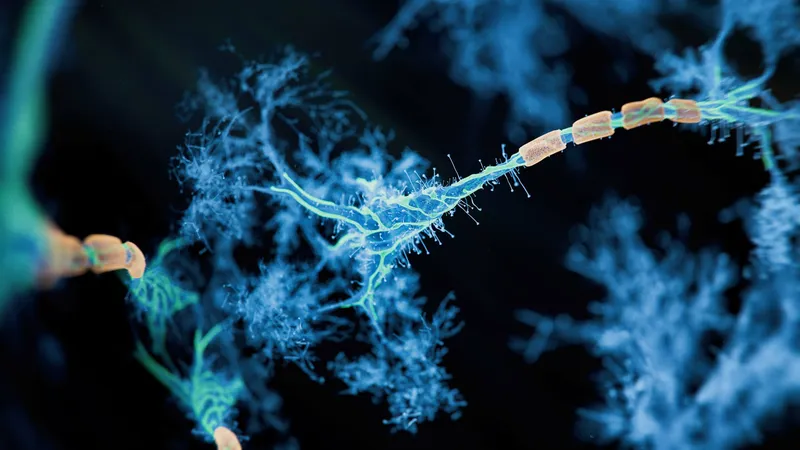
The thinking is that those antibodies can attack the wiring, or the insulation around the wiring, in the brain. Your body attacks itself. But the current readouts can be hard to interpret. With gel electrophoresis, you get blobs. Even with mass spectrometry, using older technology, those complex antibody populations could still appear as a blob. That is where this new approach changes things.
What does Direct Mass Technology change in the analysis of antibodies from cerebrospinal fluid?
The punchline is that the Thermo Scientific™ Orbitrap™ Tribrid™ Apex Mass Spectrometer can turn data that was not useful into data that is useful. With Direct Mass Technology, we can now see antibody signals in a much clearer way. It is also about 1,000-fold more sensitive, which creates a huge jump in applicability because you need much less sample.
You can see the light chain and heavy chain of antibodies. You can read out the data. When you compare a healthy sample with a sample from someone with neuroinflammation, the difference becomes much clearer. You can drive a truck between some of those peaks.
We have now performed this across more than 100 subjects. That scale and clarity are what make the data so powerful. Once you can see the antibodies, you can begin comparing populations. You can “do” the science.
Could this support faster diagnosis for multiple sclerosis or related neuroinflammatory diseases?
Yes, that is the diagnostic part. Right now, the comparison is between blobs on a gel and a high-resolution readout that gives much greater clarity. This kind of approach could lead to real impact in neuroinflammation, including multiple sclerosis.

It is not always as clear as one example on a slide, of course. But now we can analyze hundreds of people. That opens the door to understanding what these antibody patterns look like across a population.
The ideal would be a test where someone meets certain criteria, you analyze the sample, and you get a clearer yes-or-no answer. I can see a path to getting there and I don’t see it as a distant, long-term possibility.
You also described a path toward treatment. How does sequencing antibody proteoforms change what researchers can do?
There is another use of the same instrument and the same Direct Mass Technology mode. Profiling lets you see what is there. You move from no useful data to a profile in the mass domain. But the next step is sequencing. From a series of peaks, you can isolate one and sequence it. That is why I think this is the best protein sequencer on the planet right now.
For antibodies, you can sequence a large portion of the heavy chain, including regions that are highly valuable. These regions help determine how the antibody binds to its target. If those antibodies are involved in disease, and if they are attacking structures such as myelin in the brain, then knowing the sequence gives researchers a path to understand that interaction.
There are multiple steps between that knowledge and a treatment. But if you know the sequences, you can begin to understand how to interrupt the binding of those antibodies to their targets. That creates a possible path toward doing something about the disease mechanism.
What makes this technology different from previous mass spectrometry approaches?
There is a detailed physics-level explanation, but the simpler answer is that we can now detect the pieces of the puzzle we need. Before, we might obtain 10 or 20 percent of the pieces. Now we can get closer to 90 percent. That gives you enough information to piece together the sequence of the protein or proteoform.

That is why this moment at ASMS is so exciting. The conference is full of discussion about proteoforms. It is a major shift, and several large vendors are now focusing on it.
Why are proteoforms such an important shift for biology?
Proteins are the worker bees of biology. When disease happens, proteins are often where things go wrong. But the concept of a single protein can be too simple. Take tau in Alzheimer’s disease. People often talk about “the protein tau,” but there are hundreds of tau proteoforms. We and others have published work showing that there are 400 or 500 and counting.
Now we have technology that can match that biology. That is new, and that is why people are excited. Proteomics is going to become a very large field over the next several years because we need to understand biology at the protein level. That means understanding proteoforms. It means protein and proteoform sequencing.
Beyond multiple sclerosis, where do you see the biggest applications?
All human disease involves proteins, so the application space is vast. I see major potential in neurodegeneration and neuroinflammation. That includes diseases of the brain such as Alzheimer’s disease, Parkinson’s disease, and Lou Gehrig’s disease.
In our lab, we are going after many targets. In neurodegeneration, that includes key proteins such as tau, alpha-synuclein, and TDP-43. These are central proteins in Alzheimer’s, Parkinson’s, and ALS.
In oncology, we are looking at targets such as KRAS, MEK1, and ERK1. We have also gone after larger proteins, such as beta-catenin and alpha-catenin. Many of the proteins I described are in the 20 to 50 kilodalton range, but this technology lets us move higher in mass, into the 80 to 110 kilodalton range, and still map the proteoform landscape.
What comes next for your lab?
The technology changes the pace of the work. In the past, it might take a postdoc a year to begin understanding the proteoform landscape of a protein. Now we are talking about a month. We can isolate a specific protein, focus on it, and generate its proteoform landscape much faster.

That acceleration matters. It lets us ask more questions across more disease-relevant targets.
Several attributes of the method make that possible: a large increase in resolving power, a major increase in sensitivity, and a high tolerance for complexity. In cases where we could not read out the data before, now we can.
What barriers still limit adoption?
Cost is always a factor in this field, but I think the bigger barrier now is awareness. The technology has reached a stage where people can achieve a positive feedback loop. But first, they need to know this is possible. They need to understand that even if a sample contains 100 proteoforms, they can map it, profile it, and then go after key peaks for deeper sequencing.
For years, much of the community has focused on bottom-up proteomics. More recently, companies such as Olink and SomaLogic have advanced antibody-based proteomics or other proteomics approaches. For many people, that has defined what proteomics means.
Now there is a new kid on the block. For a long time, people viewed this kind of proteoform analysis as too difficult. That awareness barrier is starting to fall. At ASMS, leaders from major vendors are talking about proteoforms in flagship-level messaging. That will raise awareness fast.
The instruments can be expensive, but that has always been true in mass spectrometry. The bigger shift is that people now need to understand what this technology can make possible.
This interview has been edited for length and clarity.