Capturing up to 490 mg of lead per gram of adsorbent and recovering five rare earth elements simultaneously from complex real-world samples, a new copper-based metal-organic framework (MOF) protocol from IIT Gandhinagar (IITGN), the University of Cambridge, and the University of Birmingham addresses a persistent gap in dual-function industrial wastewater treatment. Published in Nature Protocols, the study delivers a reproducible workflow for designing, characterizing, and deploying MOFs as adsorbents for both toxic metal removal and critical mineral recovery under conditions that closely mirror operational effluent streams.
"For me, the most interesting aspect was observing the MOF in our protocol demonstrate substantial adsorption capacities," notes Dhruv Menon, a doctoral researcher in Chemical Engineering and Biotechnology at the University of Cambridge and a contributor to the study.
Why Conventional Industrial Wastewater Treatment Falls Short
Conventional industrial wastewater treatment approaches consistently underperform at low contaminant concentrations and cannot simultaneously address both toxic metal removal and critical mineral recovery. Regulatory frameworks such as the EPA's Industrial Effluent Guidelines set technology-based national standards for heavy metal discharges, yet effluents from mining, electronics manufacturing, and chemical processing carry a chemically complex mixture of toxic metals, pesticides, detergents, and organic pollutants that challenges most existing methods.
Working in analytical science?
Register for a FREE Separation Science account to subscribe to the Separation Science Newsletter.

Conventional methods such as precipitation, coagulation, and flocculation are sensitive to narrow pH windows, generate large volumes of sludge requiring secondary disposal, and cannot selectively target multiple metal species in a single pass. Electrochemical treatments carry high economic and environmental costs.
Adsorption-based approaches offer an attractive alternative: simple to operate, broadly applicable, and effective at trace concentrations. Within adsorption, MOFs stand out for the combination of tunable pore chemistry, exceptional surface areas of up to 7,000 m² per gram, and the ability to be regenerated and reused across multiple treatment cycles.

The MOF protocol captures toxic heavy metals and recovers rare earth elements via physisorption, chemisorption, and ion exchange mechanisms across a porous framework structure.
IIT Gandhinagar (2026)
The IITGN-Cambridge-Birmingham team addressed the real-world challenge that industrial wastewater is alkaline, turbid, and loaded with dissolved solids.:
- Lead adsorption capacity: 490 mg/g (copper-based MOF)
- Cadmium adsorption capacity: 264 mg/g
- Manganese adsorption capacity: 226 mg/g
- Rare earth element capture (neodymium, yttrium, dysprosium, terbium, europium): 335—351 mg/g per element
- Validated in: alkaline real wastewater (pH 8.5), artificial seawater, and e-waste-derived samples
Remediation and Critical Mineral Recovery in One Workflow
The MOF protocol addresses two acute industrial problems within a single workflow: the removal of toxic heavy metals and the recovery of rare earth elements (REEs) from the same contaminated stream. REEs are critical materials in permanent magnets, superconductors, optical systems, and batteries. They are embedded in the consumer electronics that generate e-waste, and once those materials enter contaminated water streams, conventional recovery methods are economically and technically difficult to apply.
The same copper-based MOF adsorbent that removes lead, cadmium, and manganese can also capture REEs, with regeneration and reuse cycles built into the methodology. This is directly relevant to mining, manufacturing, and e-waste processing sectors operating under increasing pressure to recover critical minerals from secondary sources.
| Parameter | Conventional Approaches | MOF Adsorption Protocol |
|---|---|---|
| pH Sensitivity | High; narrow effective range | Broad; validated at pH 8.5 |
| Contaminant Selectivity | Low; bulk removal | High; tunable pore chemistry |
| Sludge Generation | Large volumes | Minimal |
| REE Recovery | Not supported | Yes, up to 351 mg/g |
| Regeneration / Reuse | Limited | Designed into workflow |
| Real-World Validation | Rarely tested | Alkaline wastewater, seawater, e-waste |
Principal Investigator and Professor at IIT Gandhinagar, Superb Misra, explains, "There is a need for approaches that can solve multiple environmental challenges simultaneously. Our focus was on engineering the performance of MOFs to employ them for environmental remediation applications."
This MOF study aligns with India's National Critical Mineral Mission and its Critical Mineral Recycling Incentive Scheme, which targets domestic capacity for separating and producing critical minerals from secondary sources including e-waste and battery waste. It also falls within the scope of the India-UK Technology Security Initiative on sustainable extraction and recovery of critical minerals from end-of-life waste streams, and connects to United Nations Sustainable Development Goals 6, 9, and 12.
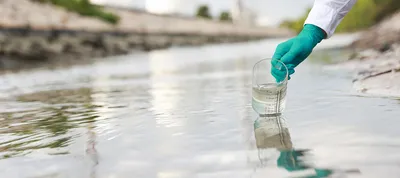
Dr. Misra also acknowledges that controlled batch results from this MOF protocol cannot be directly extrapolated to full-scale operations: "It is crucial to understand that controlled batch experiments cannot fully predict behaviors in complex wastewater. There is a need to look at factors like large-scale fabrication, cost analyses, MOF life-cycle assessment and regulatory testing."
Implications for Circular Industrial Wastewater Treatment
The MOF adsorption protocol published in Nature Protocols by researchers from IIT Gandhinagar, Cambridge, and Birmingham offers implications for circular industrial wastewater treatment by uniting toxic metal removal and REE recovery within a single validated workflow. The study's real-world testing across alkaline effluent, artificial seawater, and e-waste-derived samples gives the methodology a practical grounding that many laboratory-scale adsorption studies lack. Researchers and engineers working on industrial water remediation can use the documented protocol as a reproducible starting point, while the authors note that large-scale fabrication, cost analysis, and regulatory validation remain necessary next steps.
This article is based on a press release issued by IIT Gandhinagar and was produced under Separation Science's AI Editorial Guidelines.