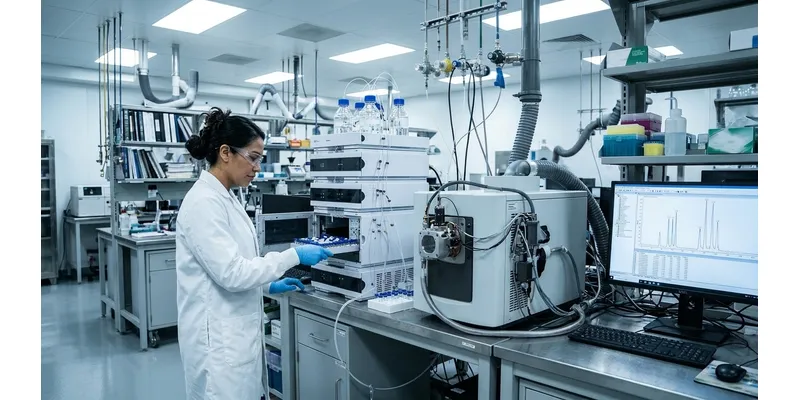
FDA has set acceptable intake limits for nitrosamine drug substance-related impurities (NDSRIs) below the detection range of routine quality control methods, pushing pharmaceutical manufacturers toward specialized contract laboratories. LGM Pharma, a provider of active pharmaceutical ingredient (API) sourcing and contract analytical testing, has acquired Sannova Analytical, a contract research organization in Somerset, N.J. The deal adds Good Laboratory Practice (GLP) bioanalysis, genotoxic and nitrosamine impurity testing, extractables and leachables testing, and elemental impurities testing to LGM Pharma's existing current Good Manufacturing Practice (cGMP) analytical services.
"Over the last five years, we've built analytical testing into a standalone business, and the two things our clients keep asking for are bioanalysis and more extensive impurity work," notes Prasad Raje, Ph.D., CEO of LGM Pharma. "Sannova gives us both, along with a U.S.-based team that develops and validates its methods at the center of the Northeast pharmaceutical corridor."
Nitrosamine and NDSRI Testing: Why Routine QC Methods Fall Short
NDSRIs are probable carcinogens with compound-specific structures that make them generally unique to each active pharmaceutical ingredient. FDA's September 2024 revised guidance on nitrosamine acceptable intake thresholds sets limits too low for standard quality control instrumentation to detect. Each NDSRI requires individually developed and validated LC-MS/MS methods rather than a generic panel.
Working in analytical science?
Register for a FREE Separation Science account to subscribe to the Separation Science Newsletter.
Extractables and leachables testing presents a parallel challenge. Container closure systems, single-use manufacturing components, and delivery devices can introduce migrant compounds into a finished drug product at trace concentrations. Pharmaceutical quality programs increasingly require validated trace-impurity LC-MS/MS workflows that cover both nitrosamine testing and extractables and leachables testing within a single regulatory framework.
Sannova's Regulatory Credentials and Validated Testing Scope
Sannova validates bioanalytical methods in accordance with the internationally harmonized guideline (ICH M10) on bioanalytical method validation and sample analysis. The laboratory holds DEA registration for Schedules II through V controlled substances; FDA inspected the site under both cGMP and GLP frameworks in 2025 with no action indicated. More than 3,500 cGMP analytical studies and more than 1,500 GLP studies are on record at the Somerset facility.
Five service areas transfer to the combined LGM Pharma platform:
- GLP Bioanalysis (ICH M10-validated): Quantitation of drug and metabolite concentrations in biological matrices for pharmacokinetic, toxicokinetic, bioequivalence, and immunogenicity programs, including anti-drug antibody (ADA) assays
- Peptide and Oligonucleotide Bioanalysis: GLP support for biologics and cell and gene therapy programs via immunoassay and PCR-based methods
- Nitrosamine and NDSRI Testing: Sensitive, reproducible trace-impurity quantitation aligned with FDA acceptable intake limits
- Extractables and Leachables Evaluations: Identification of migrant compounds from container closure systems, single-use manufacturing components, and delivery devices
- Elemental Impurities Testing: Additional cGMP analytical capacity extending LGM Pharma's existing service scope
The core of this portfolio runs on a shared chromatographic and mass spectrometric infrastructure. LC-MS/MS underpins small molecule, peptide, and oligonucleotide bioanalysis and drives NDSRI quantitation; GC-MS covers volatile nitrosamines and the organic fraction of extractables and leachables evaluations; ICP-MS handles metallic extractables and elemental impurities per ICH Q3D. Immunoassay and PCR-based platforms complete the biologics offering for immunogenicity and cell and gene therapy programs.
Drug Programs Served: Preclinical Through Phase 4 and Commercial Release
The acquisition closes a gap for pharmaceutical, biotechnology, generic drug, and contract development and manufacturing organization (CDMO) clients that previously needed separate partners for cGMP release testing and GLP bioanalysis.
| Pre-Acquisition | Combined Platform | |
|---|---|---|
| cGMP Analytical Testing | Release and stability; drug substance and drug product | Retained and expanded |
| GLP Bioanalysis | Not available | ICH M10-validated; small molecules, peptides, oligonucleotides |
| Nitrosamine / NDSRI Testing | Not available | Trace-level; aligned with FDA acceptable intake limits |
| Extractables and Leachables Testing | Not available | Container closures, single-use components, delivery devices |
| Immunogenicity / ADA Assays | Not available | Anti-drug antibody assays; PCR-based methods for biologics and cell and gene therapy |
Existing Sannova clients keep their current scientific team, validated methods, and day-to-day contacts. They also gain access to LGM Pharma's API sourcing and regulatory and market intelligence services.
"Our clients chose Sannova for the people and methods behind their data, and those stay in place," remarks Malleswar Kollu, president and CEO of Sannova Analytical. "LGM Pharma's backing lets us continue investing in our scientists, instruments, capacity, and client services faster than we could independently."
GLP Bioanalysis and Extractables Testing Join LGM Pharma's US Analytical Platform
LGM Pharma's acquisition of Sannova Analytical creates a single US-based option for pharmaceutical teams that need API sourcing, cGMP release and stability testing, GLP bioanalysis, and specialized trace-impurity work under one relationship. Sannova's FDA-inspected Somerset facility, with more than 3,500 cGMP studies and more than 1,500 GLP studies on record, provides the regulatory foundation for that expanded scope. Manufacturers facing compliance pressure on NDSRI thresholds and extractables and leachables documentation retain their existing laboratory team throughout.
This article is based on a press release issued by LGM Pharma and was produced under Separation Science's AI Policy.