In the field of environmental chemistry, achieving high precision is a constant battle against the physics of messy, real-world samples. While analyzing pristine aqueous samples is relatively straightforward, transitioning to dense, highly organic matrices introduces a series of complex analytical challenges that push even the most advanced instrumentation to its limits.
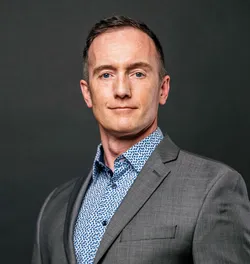
We sat down with Dr. Alistair Brown to explore the practical realities of separation science in his laboratory. He shares where standard commercial consumables fall short, how his team navigates severe matrix effects, and the innovative chromatographic strategies they employ to advance trace pesticide analysis.
The Bottlenecks of Solid Matrices
Transitioning from liquid to solid samples fundamentally changes the analytical landscape. In pristine aqueous environments, Brown’s laboratory can reliably quantify extensive suites—such as their largest method of 171 compounds—using ultra-high performance liquid chromatography-tandem mass spectrometry (UHPLC-MS/MS) via direct injection, internal standards, and dynamic multiple reaction monitoring (dMRM).
However, Brown points out that shifting to solid matrices such as soils, sediments, biosolids, chars, and sludge immediately eliminates the option of direct injection.
Working in analytical science?
Register for a FREE Separation Science account to subscribe to the Separation Science Newsletter.

"The second you shift to solid matrices—whether soils, sediment, biosolids, or sludge—you can no longer rely on direct injection, even with crude extracts," he explains. "You risk ruining your guard column and experiencing volatile shifts in backpressure. This immediately alters retention times, throwing off your dMRM windows and compromising the trueness, repeatability, and reproducibility of the entire assay."
Beyond these physical hurdles, Brown emphasizes that complex solid samples can severely alter the extractability of both endogenous pesticides and their matching internal standards. The high ionic strength of environmental matrices introduces significant challenges with complexation and matrix effects.
Furthermore, solid samples require that the chosen extraction technique—whether classic solid-liquid methods such as Soxhlet and accelerated solvent extraction (ASE), or sonication coupled to solid-phase extraction (SPE/dSPE)—be chemically compatible with the target analytes.
"The more classes of compounds or varying charges you want to measure," Brown notes, "the less likely you are to find a single extraction method that works for all of them. There is an inherent trade-off in how comprehensive your analysis can be."
Where Commercial Consumables Fall Short
According to Brown, standard commercial kits and sorbent cleanup techniques often struggle against the demanding limits of environmental and regulatory analysis. A major limitation of sorbent cleanups lies in the thresholds of trueness and the method limits of quantification (MLQ), which are heavily challenged when analysts must detect compounds below strict aquatic life reference values or human health guidelines.
Brown draws on a telling example from his past research to illustrate this limitation:
"During my post-doc in cannabis compliance, where I analyzed fungal mycotoxins in cannabis flowers, there were no commercial QuEChERS sorbents that didn't scavenge virtually all of our target analytes. To work around this, we had to develop matrix-matched calibration curves just to achieve the 2 ppb limit of quantification required for certain mycotoxins."
He explains that the same challenges apply to any environmental analyte that is strongly complexed with its matrix, experiences significant ion suppression, or lacks "equi-responsiveness" between unlabeled target compounds and their labeled analogs. Additionally, Brown notes that internal standards can sometimes partition disproportionately between the extracted aqueous and organic layers during sample preparation, making the careful selection of chemical surrogates absolutely critical.
Dr. Brown’s Strategies for Mitigating Matrix Effects
To combat severe matrix suppression or enhancement while maintaining trace pesticide recovery, Brown’s laboratory relies on a deliberate mix of instrument optimization and a sharp eye for physical consumables.
1. Source Optimization
Brown highlights a technique his lab implemented in late 2021 with help from the Agilent R&D team: automated source optimization. Using specialized software, they automatically maximize analyte abundances within whatever specific matrix they are running (for example, surface water vs. sediment extract).
"This automatically optimizes source parameters—such as desolvation, sheath gas flow, gas temperature, and nozzle and capillary voltages—to find the ideal 'sweet spot' for your specific suite of target pesticides," Brown explains. However, he adds a practical caveat: "If you are running an exceptionally large target list, that sweet spot washes out and the optimization becomes less effective. But for smaller, tailored suites, it's a fantastic trick."
2. Under-Recognized Syringe Filter Effects
Brown shares a surprising story from his lab that changed his view of the final filtration step before vial injection. He had been using hydrophilic PTFE filters for 14 years without questioning their performance, but an honors student running a pesticide dissipation experiment accidentally proved him wrong.
"One day, she brought PVDF syringe filters from another lab in Biosystems Engineering, thinking she had used up too many of mine," Brown recalls with a smile. "By pure accident, she discovered that switching to PVDF caused our abundances for certain compounds to increase tenfold!"
Brown realized that the PTFE filters had actually been scavenging some of the target pesticides. "While this wouldn't impact our solvent-based internal standard curves, it vastly improved our analytical response and sensitivity for those specific compounds. I'll never overlook filter chemistry again."
Advanced Chromatographic Column Selection
When it comes to capturing both parent pesticides and their highly polar, hydrophilic transformation products in a single run, Dr. Brown asserts that column stationary phase selection is everything. He relies on three distinct stationary phase strategies to manage diverse polarities:
- For extreme hydrophilicity and bulky polar targets: Drawing on his Master's and PhD research on human pharmaceutical metabolite conjugates (which are highly hydrophilic and can have pKa values in the -2 range), Brown developed a framework using a Waters High Stability Silica T3 tridentate C18 stationary phase. By utilizing medium-density ligands, bulky polar molecules—such as thyroxine glucuronide (MW ~ 900)—can simultaneously interact with the column ligands and the exposed, endcapped silica base. This delivers a highly effective mixed-mode association that leverages molecular stereochemistry.
- For wide quantitative suites: To run his laboratory's rapid, 171-pesticide quantitative method, Brown takes advantage of a phenyl hexyl column. Because it avoids thick "lawns" of C18 chains, it provides brief interactions, sharp peaks, and excellent reproducibility. This allows his team to maximize the number of simultaneous mass transitions without sacrificing dwell time—all in a single, efficient 10-minute run.
- For highly anionic hydrophilic pesticides: Highly polar, anionic compounds, including glyphosate, glufosinate, and the transformation product AMPA, are notoriously difficult to resolve. After finding HILIC columns inefficient for their workflow, Brown’s team turned to Agilent's Charged Surface (CS) C18 column coupled with a proprietary "deactivator" based on methylenediphosphonic acid. The deactivator limits interactions with the metallic components of the LC system, whereas the charged surface enables direct electrostatic interactions with the anions.
Brown shares a crucial tip for running this setup: "The only catch is that your flushing protocol is essentially reversed: you must start with an unbuffered solution, and finish by storing the column in 0.1% formic acid and the deactivator."
Navigating Platform Selection: GC-MS vs. LC-MS
Choosing between gas chromatography and liquid chromatography platforms when handling high-interference environmental samples requires a systematic approach. Brown outlines a four-part decision-making framework he has developed over his career:
- Source of the analyte: If the target is present in water, LC is Brown's preferred method because the analyte is sufficiently polar to be soluble. If the matrix is a solid (soils, sludges, sediments), the organic solvent chosen for extraction will dictate the subsequent mass spectrometry technique.
- Ionizability: Barring chemical derivatization, some pesticides are strictly compatible with only one platform. For LC, Brown advises looking for selected ion monitoring (SIM) or MRM transitions in both positive and negative electrospray ionization modes. "There are just some compounds you would assume work really well in one mode based on structure, but they actually work even better in the opposite mode," he notes.
- Broad compatibility: In Brown's experience, there is generally greater compatibility with LC-MS/MS for modern pesticides of concern. Because the current frontier of environmental chemistry focuses heavily on highly polar biological and environmental transformation products, LC-MS/MS is naturally suited to handle them in a single, consolidated workflow.
- The physics of internal standards: Because it is virtually impossible to buy isotopically labeled analogs for all 171 targets in a large suite, compromises must be made. Brown emphasizes that proximity of retention time and equi-responsiveness are the two most critical parameters when selecting surrogates to correct for matrix effects and extraction losses.
He warns: "Even isotopically labeled analogs can experience slightly different matrix effects due to mass differences, which causes them to nebulize and ionize in different 'packets' of solvent than their targets. If the instrument's response is not perfectly equal between the target pesticide and its surrogate in the matrix, it introduces error into both your trueness and your relative response factors. Deciding how much of that error to accept is the ultimate balancing act—and it is exactly why regulatory guidelines allow an accuracy range of 70% to 120%. That is simply life as an environmental chemist."
The Future of Separation Science
Looking to the future, Brown believes the most urgent innovation needed from analytical manufacturers is not in sample extraction, but in chromatography.
"I believe the real frontier lies in taking techniques like 2D 'heart-cutting' or tandem chromatography and compiling them into a single stationary phase," he predicts. "Developing mixed-mode columns that can simultaneously separate cationic, anionic, and neutral species in one pass would be game-changing."
If manufacturers can successfully combine these mechanisms into a single column run, laboratories can dramatically streamline their workflows.
"If we can compress what would normally be two separate chromatographic runs into one, we literally double a lab's productivity while halving instrument runtime, technician labor, and client turnaround time," Brown points out.
He draws a parallel between polarity switching and LC "sandwich injections," which have already revolutionized his workflow—the latter eliminating the tedious step of reconstituting samples in organic-water mixtures to preserve peak symmetry. For Brown, these advancements in column chemistry are the key to unlocking highly robust, high-throughput testing: "The more this is normalized, the more fun chemists will have in the lab."