

A laboratory may produce acceptable PFAS validation data yet remain ineligible for a regulatory monitoring program. Formal accreditation or certification can add requirements for personnel, quality systems, audits, records, and proficiency testing.
The exact route depends on the sample matrix, method, jurisdiction, and intended use of the results. Laboratories should define these requirements before offering PFAS analysis rather than seek accreditation after client work has begun.
Distinguish Capability From Accreditation
Method verification shows that a laboratory can meet defined analytical criteria. Accreditation provides independent recognition that the laboratory operates within an approved scope and quality system.
Accreditation does not cover every test the laboratory performs. The scope normally identifies the matrix, method, and analytes or technology for which the laboratory has approval. A laboratory accredited for drinking-water analysis may not hold equivalent recognition for wastewater, soil, or tissue.
Clients should therefore check the detailed scope rather than rely on a general statement that the laboratory is accredited.
Working in analytical science?
Register for a FREE Separation Science account to subscribe to the Separation Science Newsletter.

Identify the Governing Program
Drinking-water compliance provides a clear example. EPA’s PFAS drinking-water methods page explains that laboratories analyzing regulated PFAS must meet certification requirements and use approved methods.
States or primacy agencies commonly administer drinking-water laboratory certification. EPA provides contact information for state certification programs and certified laboratories, but requirements can vary by jurisdiction.
Other environmental work may fall under state programs, the National Environmental Laboratory Accreditation Program, or client-specific requirements. A contract, permit, or quality-assurance project plan may demand accreditation even when a federal method does not.
The laboratory should confirm:
- Required accreditation or certification body
- Matrix and method within scope
- PFAS or analytes covered
- Approved method version
- Reporting-limit requirements
- Proficiency-testing obligations
- Reciprocal recognition across jurisdictions
This review prevents the laboratory from assuming that one approval covers every PFAS project.
Build the Quality System Around the Method
Accreditation examines more than instrumental capability. Assessors may review document control, training, traceability, equipment records, standards, corrective action, internal audits and data integrity.
PFAS analysis places added pressure on several of these systems. Laboratories need traceability for consumable and reagent lots because either can change blank performance. They also need records that connect calibration standards, labelled compounds and preparation batches with reported results.
Method revisions require controlled implementation. A laboratory using EPA Method 1633A, for example, should ensure that its procedures reflect the current revision and that staff understand changes affecting holding times, subsampling, QC, or reporting.
Demonstrate Analyst Competency
Laboratory accreditation does not replace individual competency assessment. Analysts must show that they can perform the tasks assigned to them.
Competency should cover sample preparation, LC-MS/MS operation, chromatogram review, and quality-control decisions where relevant. An analyst who can inject a prepared extract may not yet be qualified to perform tissue homogenization or approve a batch.
The laboratory should document initial training, observed demonstrations, successful performance studies, and ongoing competency. Retraining may be necessary after major method changes, prolonged absence, or recurring errors.
Use Proficiency Testing as an External Check
Proficiency testing supplies a sample with an undisclosed assigned value. The laboratory processes it through its routine method and submits results for independent evaluation.
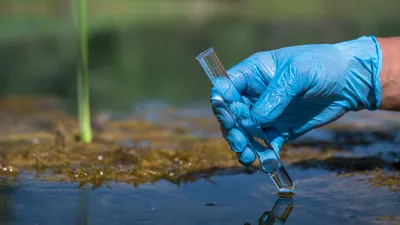
This tests the combined performance of staff, equipment, calibration, preparation, calculations, and reporting. A successful result supports competence at that point in time. It does not prove that every routine batch remains controlled.
The laboratory should select studies that match its accredited scope. The NELAC Institute lists accredited proficiency-testing providers, but availability may differ by matrix, analyte, and method.
PFAS proficiency testing can expose problems that internal spikes do not, including standard bias, unit errors, and differences in the interpretation of reporting requirements.
Investigate Failures Rather Than Retest Blindly
A failed proficiency test should trigger a documented investigation. Repeating the test without identifying the cause may produce a passing result while leaving the underlying weakness in place.
The investigation should review sample receipt, storage, preparation, standards, calibration, blanks, integration, calculations, and data transcription. The laboratory should determine whether the issue could have affected routine samples and take corrective action where needed.
Follow-up evidence may include successful reanalysis, additional competency testing, revised procedures, or a new proficiency sample. The accreditation body or program determines the formal response required.
Maintain Accreditation Between Assessments
Accreditation requires continued control after the assessment ends. New instruments, additional matrices, method modifications, and staff changes can alter the basis on which approval was granted.
The laboratory should monitor proficiency results, blank trends, audit findings, corrective actions, and competency records. It must also notify the accreditation body when required and seek a scope extension before representing new work as accredited.
Accreditation provides a framework for competence. The laboratory sustains that competence through routine evidence that its people, methods, and quality system continue to produce defensible PFAS data.
This article was produced under Separation Science's AI Editorial Guidelines.

