
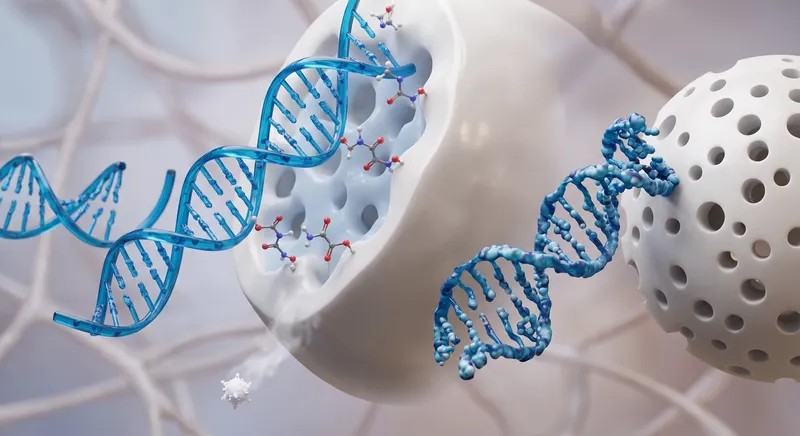
The therapeutic landscape is experiencing a massive influx of oligonucleotide-based drugs, including antisense oligonucleotides (ASOs), small interfering RNAs (siRNAs), and RNA aptamers. Because these synthetic biomolecules are manufactured via solid-phase synthesis, the final drug product contains a complex mixture of closely related impurities. These include short sequences (N-1, N-2 truncations), longer sequences (N+1 additions), and various chemical modifications like oxidation or depurination.
To ensure efficacy and patient safety, strict regulatory guidelines demand the rigorous profiling and quantitation of these impurities. High-resolution mass spectrometry (HRMS) hyphenated to liquid chromatography is the undisputed technique for this task. However, standard reversed-phase LC (RPLC) fails completely for oligonucleotides because these molecules are highly polar, negatively charged polyanions (due to their phosphodiester backbones) that exhibit zero retention on a hydrophobic C18 column.
The IP-RP-LC Problem
For the past two decades, the industry's solution has been ion-pairing reversed-phase liquid chromatography (IP-RP-LC). By adding alkylamine ion-pairing reagents—most notably triethylamine (TEA) or hexylamine (HA)—alongside a fluorinated alcohol like hexafluoroisopropanol (HFIP) to the mobile phase, the hydrophobic alkyl chains of the amine bind to the oligonucleotide's phosphate backbone. This masks the polarity, allowing the oligo to be retained and separated on a standard C18 column.
While chromatographically highly effective, IP-RP-LC is analytically disastrous for the mass spectrometer. The ion-pairing reagents, particularly the fluoroalcohols, cause extreme ion suppression in the electrospray ionization (ESI) source, severely limiting the limit of detection (LOD). Worse, alkylamines are notoriously "sticky." They permanently contaminate the LC flow path and the mass spectrometer optics. Once an LC-MS system is used for IP-RP-LC, it is effectively dedicated to that application forever; running a standard peptide or small molecule assay on that instrument afterward will yield spectra dominated by residual TEA clusters.
The HILIC-MS Advantage
To escape the ion-pairing trap, separation scientists are rapidly pivoting to hydrophilic interaction liquid chromatography (HILIC). HILIC operates on a fundamentally different mechanism: it utilizes a polar stationary phase (such as amide, diol, or zwitterionic chemistries) and a highly organic mobile phase (typically >60% acetonitrile) containing a small percentage of aqueous buffer.
In HILIC, a water-enriched layer forms on the surface of the polar stationary phase. The highly polar oligonucleotides partition into this aqueous layer, separating based on hydrophilicity and electrostatic interactions without the need for any ion-pairing masking agents.
Because HILIC utilizes high concentrations of highly volatile organic solvents and standard MS-friendly buffers (like ammonium acetate or ammonium formate), the desolvation efficiency in the ESI source is drastically improved. The result is a profound increase in ionization efficiency, yielding significantly lower LODs, cleaner mass spectra, and zero permanent contamination of the LC-MS system.
Method Optimization Strategies for Oligo HILIC-MS
While HILIC protects the mass spectrometer, it requires meticulous method development to achieve robust, reproducible chromatography. HILIC is highly sensitive to minor variations in mobile phase composition and sample preparation.
Column Chemistry Selection: Not all HILIC columns are suited for oligos. Amide-bonded phases provide excellent hydrogen bonding capabilities, while Zwitterionic (ZIC) stationary phases offer a combination of partitioning and weak electrostatic interactions that are particularly effective for resolving phosphorothioate (PS) modified oligonucleotides from their native phosphodiester counterparts.
Buffer Optimization: Ionic strength is critical in HILIC to disrupt secondary electrostatic interactions that cause peak tailing. Use volatile buffers like ammonium acetate or ammonium formate at concentrations between 10 mM and 50 mM. A slightly acidic to neutral pH (5.5 to 7.0) typically provides the best peak shape and MS response.
The Sample Diluent Trap: This is the most common point of failure in HILIC method transfer. Oligonucleotides are traditionally dissolved in 100% water. However, injecting a highly aqueous sample plug into a HILIC column (which starts at >65% organic) destroys the local partitioning layer, causing severe peak distortion, peak splitting, or total breakthrough in the void volume. Samples must be diluted in a high proportion of organic solvent (e.g., 50-70% acetonitrile) before injection to match the initial mobile phase conditions.
Biocompatible Hardware is Mandatory: Like all nucleic acids, oligonucleotides are aggressive metal scavengers. They will rapidly adsorb to the electron-deficient surfaces of stainless-steel tubing, pump heads, and column frits. To prevent analyte loss and severe tailing, deploy a fully biocompatible LC flow path using PEEK, passivated titanium, or specialized surface-coated hardware (such as inert hybrid surfaces).

